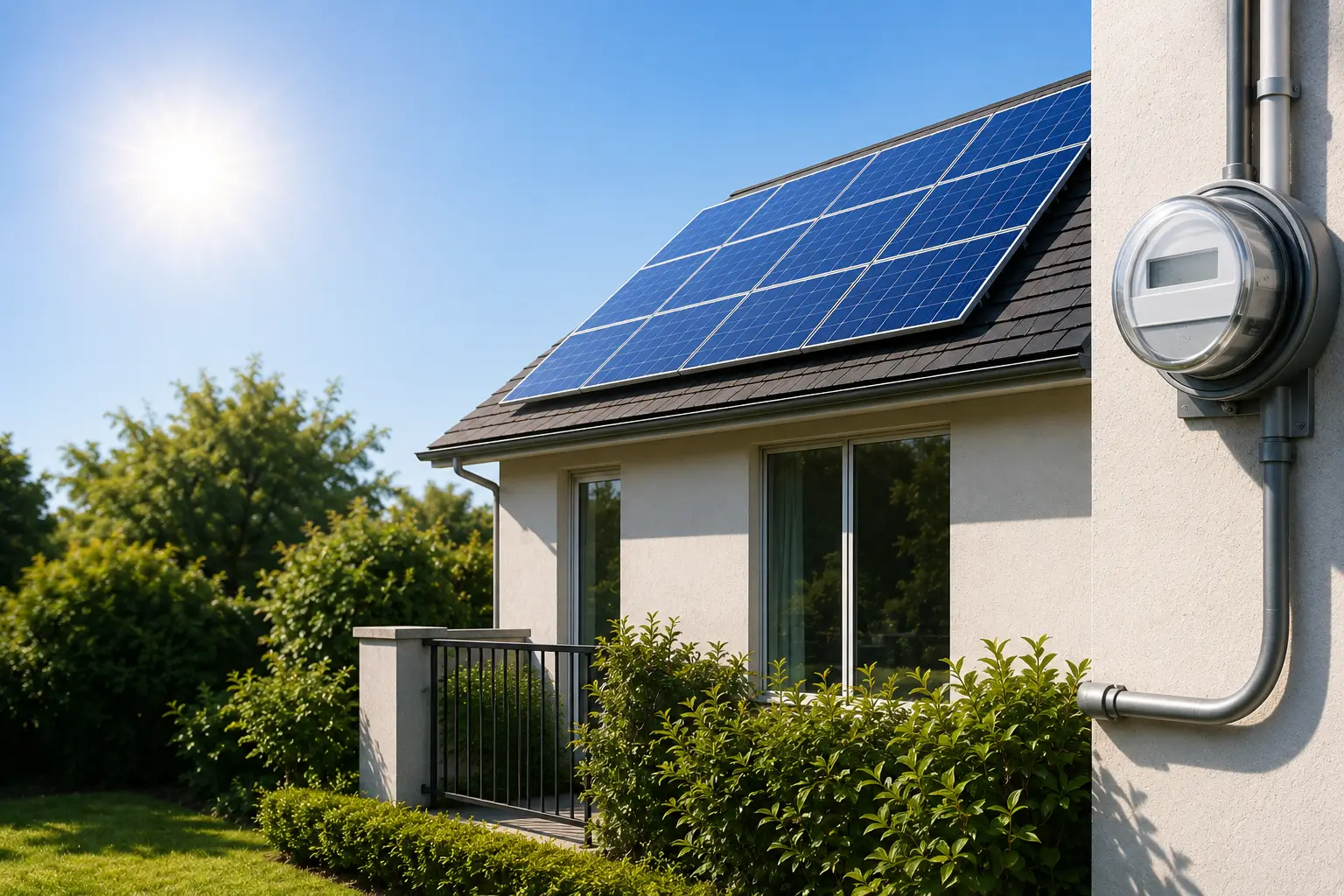
Net Metering in the Philippines: A Complete Guide for Homeowners
As electricity rates continue to rise, more Filipino homeowners and businesses are investing in solar energy systems to reduce their monthly power bills. One of the biggest advantages of installing a grid-connected solar system is net metering, a program that allows you to earn credits for excess solar energy exported to the utility grid.
In this guide, we’ll explain how net metering works in the Philippines, its benefits, eligibility requirements, and how you can start saving more with solar power.
What Is Net Metering?
Net metering is a billing arrangement that allows solar energy system owners to send excess electricity generated by their solar panels back to the distribution utility’s grid.
When your solar panels produce more electricity than your home consumes, the excess power is exported to the grid. In return, your utility company provides credits that help offset your future electricity consumption.
The program is implemented under the Renewable Energy Act of 2008 (Republic Act No. 9513) and is regulated by the Energy Regulatory Commission (ERC).
How Does Net Metering Work?
Here’s a simple example:
- Your solar panels generate electricity during the day.
- Your home uses the power it needs first.
- Excess electricity is automatically exported to the utility grid.
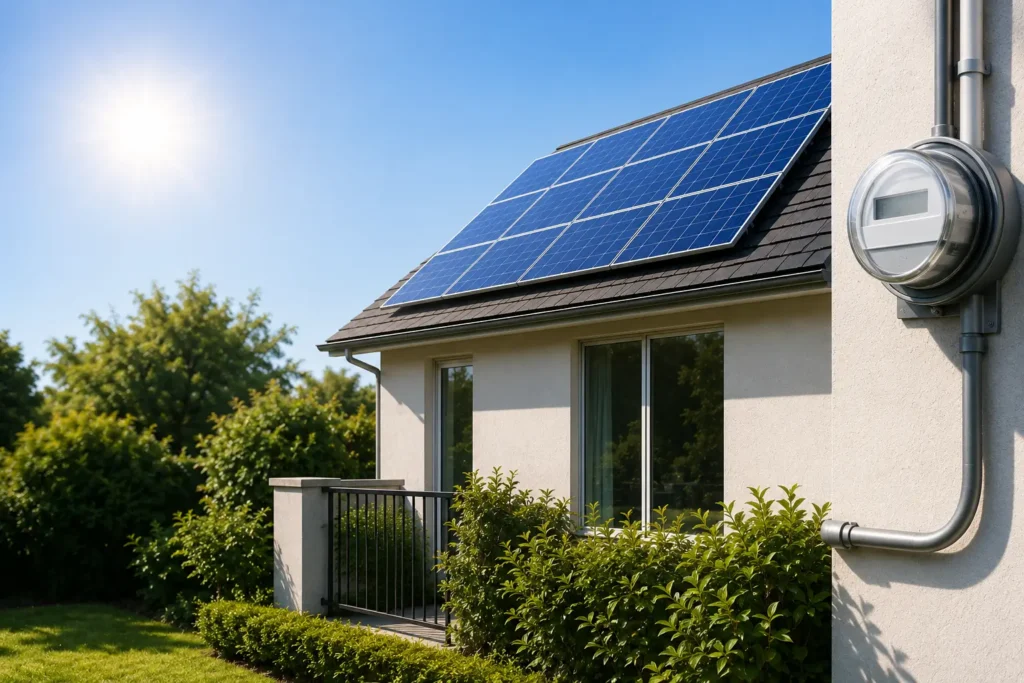
- A bidirectional meter records both:
- Electricity imported from the grid
- Electricity exported to the grid
- Your utility company credits the exported energy against your bill.
Example Scenario
| Description | kWh |
|---|---|
| Monthly Consumption | 600 kWh |
| Solar Production | 700 kWh |
| Excess Exported to Grid | 100 kWh |
The 100 kWh exported to the grid earns credits that reduce your monthly electricity charges.
Benefits of Net Metering
Lower Electricity Bills
Net metering allows homeowners to maximize the value of their solar investment by receiving credits for excess energy generation.
Faster Return on Investment
Because excess energy is not wasted, your solar system can achieve a quicker payback period.
Increased Energy Efficiency
A properly designed solar system can significantly reduce your dependence on grid electricity.
Environmentally Friendly
Solar energy reduces greenhouse gas emissions and supports the country’s renewable energy goals.
Increased Property Value
Homes equipped with solar power systems are often more attractive to buyers due to lower operating costs.
Who Can Apply for Net Metering?
Residential, commercial, industrial, and institutional customers may qualify for net metering if they:
- Are connected to the distribution utility’s grid
- Install a renewable energy system with a capacity of up to 100 kW
- Meet the utility’s technical and safety requirements
- Obtain the necessary approvals and permits
Requirements for Net Metering Application
While requirements may vary slightly among utilities, applicants generally need:
Documents Required
- Accomplished application form
- Proof of ownership or authorization
- Latest electric bill
- Single-line diagram (SLD)
- Electrical plans signed and sealed by a licensed Professional Electrical Engineer (PEE)
- Equipment specifications
- Certificate of Final Electrical Inspection (CFEI), if required
System Requirements
- Grid-tied or hybrid inverter with anti-islanding protection
- Compliance with Philippine Electrical Code standards
- Utility-approved interconnection equipment
How Much Can You Save with Net Metering?
Savings depend on several factors:
- Monthly electricity consumption
- Solar system size
- Solar irradiance in your location
- Utility rates
- Percentage of self-consumption versus exported energy
For many households, net metering can increase overall solar savings by allowing excess daytime production to offset nighttime electricity usage.
Net Metering vs. Battery Storage
Many homeowners ask whether they should choose net metering or battery storage.
Net Metering
Advantages:
- Lower initial investment
- No battery maintenance
- Faster ROI
Limitations:
- Does not provide backup power during grid outages unless paired with a hybrid system and battery
Battery Storage
Advantages:
- Backup power during blackouts
- Greater energy independence
Limitations:
- Higher upfront cost
- Batteries eventually require replacement
For many homeowners, a hybrid solar system that supports both net metering and future battery expansion offers the best balance of savings and reliability.
Common Questions About Net Metering
Does Net Metering Eliminate My Electric Bill?
Not completely. Most customers still pay fixed charges, meter fees, and any electricity consumed beyond what their solar system generates.
Can I Earn Cash from Excess Electricity?
In most cases, excess generation is credited to your account rather than paid out as cash.
How Long Does the Application Process Take?
Processing times vary depending on the utility company, completeness of documents, and inspection schedules.
Do I Need a Special Meter?
Yes. A bidirectional meter is required to measure both imported and exported electricity.
Why Choose DDC Coolmakers for Your Solar Installation?
At DDC Coolmakers, we help homeowners and businesses maximize their solar investment through properly designed solar power systems and assistance with net metering applications.
Our services include:
- Solar system design and consultation
- Professional installation
- Electrical plans and documentation assistance
- Net metering application support
- After-sales service and maintenance
Whether you’re planning a residential or commercial solar project, our team can help you achieve long-term energy savings.
Start Saving with Solar and Net Metering Today
Net metering is one of the most effective ways to maximize the benefits of solar energy in the Philippines. By converting excess solar production into bill credits, homeowners can significantly reduce electricity costs and improve the return on their solar investment.
Ready to install solar panels and apply for net metering?
Visit https://solar.ddccoolmakers.ph/ today and get a free consultation from our solar energy experts.